Description
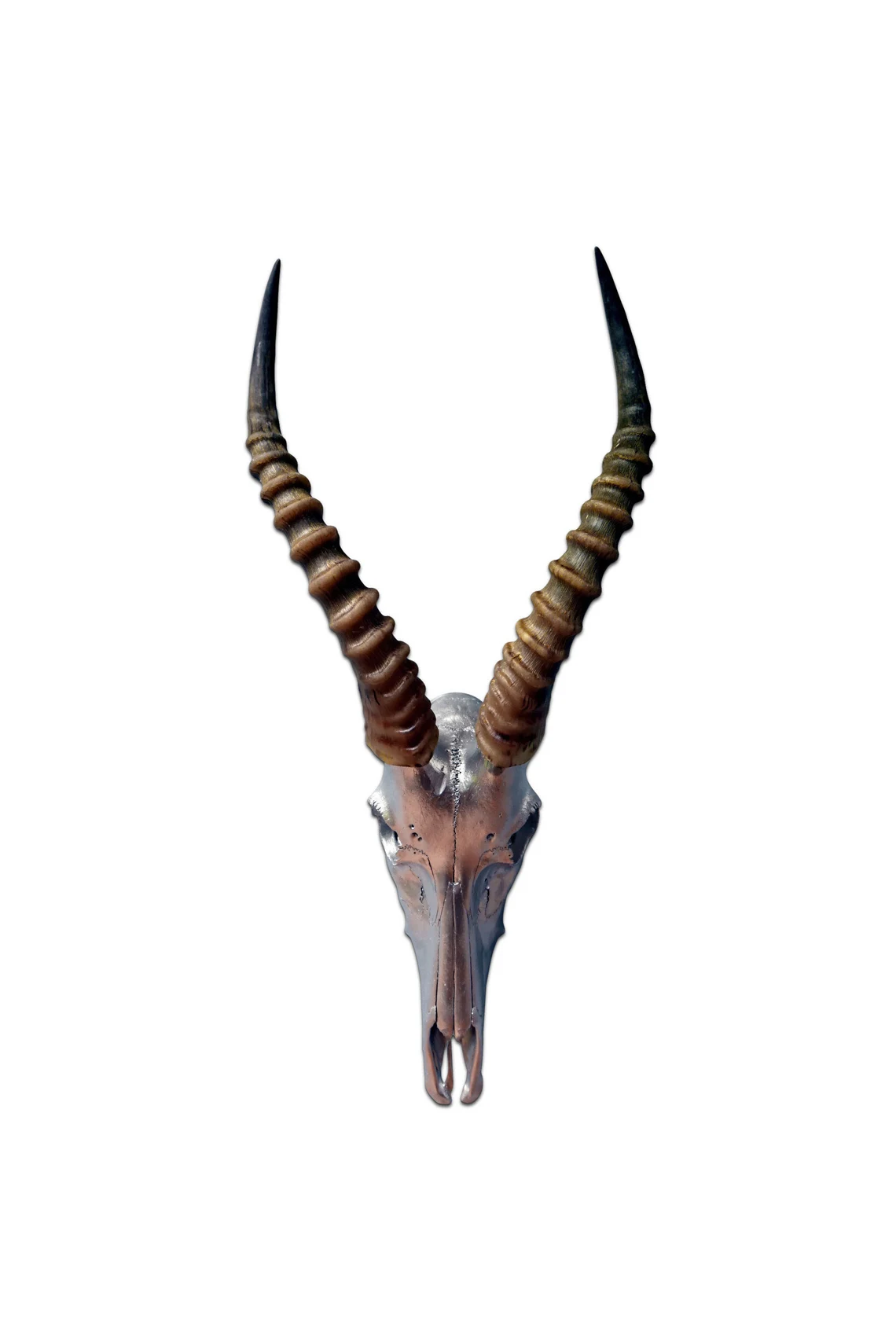
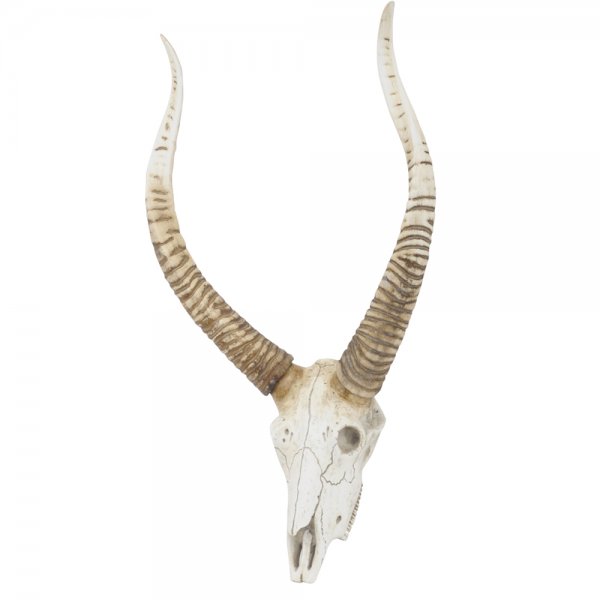
Buy Antelope Cranium- Deer Skull
The antelope cranium, or deer skull, features several distinctive characteristics:
Key Features:
1. **Antlers**: In male deer and some antelope species, the skull typically includes antlers, which are bony growths used for fighting and display during mating season. Antlers are shed and regrown annually.
2. **Long Nasal Region**: The skull has an elongated nasal area, which aids in a keen sense of smell—important for detecting predators and finding food.
Antelope Cranium- Deer Skull for sale
3. **Large Eye Sockets**: The eyes are positioned on the sides of the skull, providing a wide field of vision to spot predators.
4. **Hollow Bones**: The cranium is relatively lightweight due to its hollow bone structure, which aids in agility and speed.
5. **Dental Structure**: The skull has a specialized dental arrangement with flat molars for grinding plant material, reflecting the herbivorous diet of deer and antelope. Antelope Cranium- Deer Skull for sale
Functionality:
The antelope cranium is adapted for survival in various environments, allowing for effective foraging, predator avoidance, and social interactions within their species. Its design reflects the needs of these animals in the wild, emphasizing speed, agility, and sensory perception.
Here’s a more detailed overview of the **antelope cranium** or **deer skull**:
Buy Antelope Cranium- Deer Skull Online
Detailed Features:
1. **Cranial Structure**:
– The cranium is generally elongated and streamlined, which aids in aerodynamics during running. This is particularly beneficial for species that rely on speed to escape predators.
2. **Antlers and Horns**:
– **Antlers**: In species like deer, antlers grow from pedicels and are covered in a velvet-like skin while growing. Once mature, they harden and are often shed after mating season.
– **Horns**: In antelope species, horns are permanent and made of a bony core covered in a keratin sheath. They are used for defense and dominance displays.
3. **Facial Features**:
– The skull often has a pronounced, elongated face to accommodate large nasal passages, enhancing the sense of smell, crucial for detecting food and threats.
– The presence of large orbits (eye sockets) allows for keen eyesight, important for spotting danger from afar.
4. **Dental Adaptations**:
– The front teeth (incisors) are well-adapted for grazing, while molars at the back are flat and ridged for grinding tough plant material. The dental formula varies between species but generally reflects a herbivorous diet.
5. **Zygomatic Arch**:
– The zygomatic arch (cheekbone) is robust, providing attachment points for strong jaw muscles, facilitating the grinding of fibrous vegetation.
6. **Temporal Fossa**:
– The area above the eye sockets where the temporal muscles attach is often prominent, reflecting strong muscles that help in chewing tough vegetation.
Functional Importance:
– **Foraging**: The adaptations of the skull support a herbivorous diet, allowing these animals to efficiently graze on grasses, leaves, and other vegetation.
– **Predator Avoidance**: The wide field of vision and acute sense of smell help in early detection of predators, aiding in survival.
– **Social Behavior**: Antlers and horns play a role in mating displays and dominance hierarchies, influencing social structure within herds.
Ecological Role:
Antelope and deer are important herbivores in their ecosystems, often influencing plant community dynamics through grazing. They serve as prey for larger predators, playing a critical role in food webs. Buy antelope cranium-deer skull at affortable price.
Overall, the structure of the antelope cranium or deer skull reflects a highly adapted evolutionary response to their environment, ensuring survival and reproductive success.
An **antelope cranium** or **deer skull** is an intricate structure that reflects the unique adaptations of these herbivorous animals. The skull is typically elongated, with distinct features that aid in foraging, defense, and survival.
### Key Features:
– **Antlers or Horns**: In male deer, the skull is often adorned with antlers, which are bony structures used during mating season for displays and fighting. Antelope species, on the other hand, usually have permanent horns that grow throughout their lives. Both are key for defense and social dominance.
– **Nasal Cavity**: The elongated nasal region enhances the sense of smell, which is critical for detecting predators and finding food.
– **Large Eye Sockets**: The eye sockets are positioned on the sides of the skull, giving the animal a wide field of vision to monitor for predators.
– **Jaw and Teeth**: The cranium features specialized flat molars at the back of the jaw, ideal for grinding fibrous plant material, reflecting their herbivorous diet. The front teeth are adapted for clipping grass and foliage.
– **Lightweight Structure**: The skull is relatively light and hollow, allowing for swift and agile movement, especially necessary for running from predators.
### Function:
The antelope cranium or deer skull is designed for survival in environments where these animals must constantly forage while being alert for predators. Their sensory adaptations (keen smell and wide vision) and physical structures (antlers or horns) play a crucial role in both defense and reproduction.
These skulls are often used in educational settings, taxidermy, and natural displays to represent the anatomy and ecological role of herbivores.